Argentina
12,500ha of Prime Acreage with Drill-Ready Targets in Salta Province
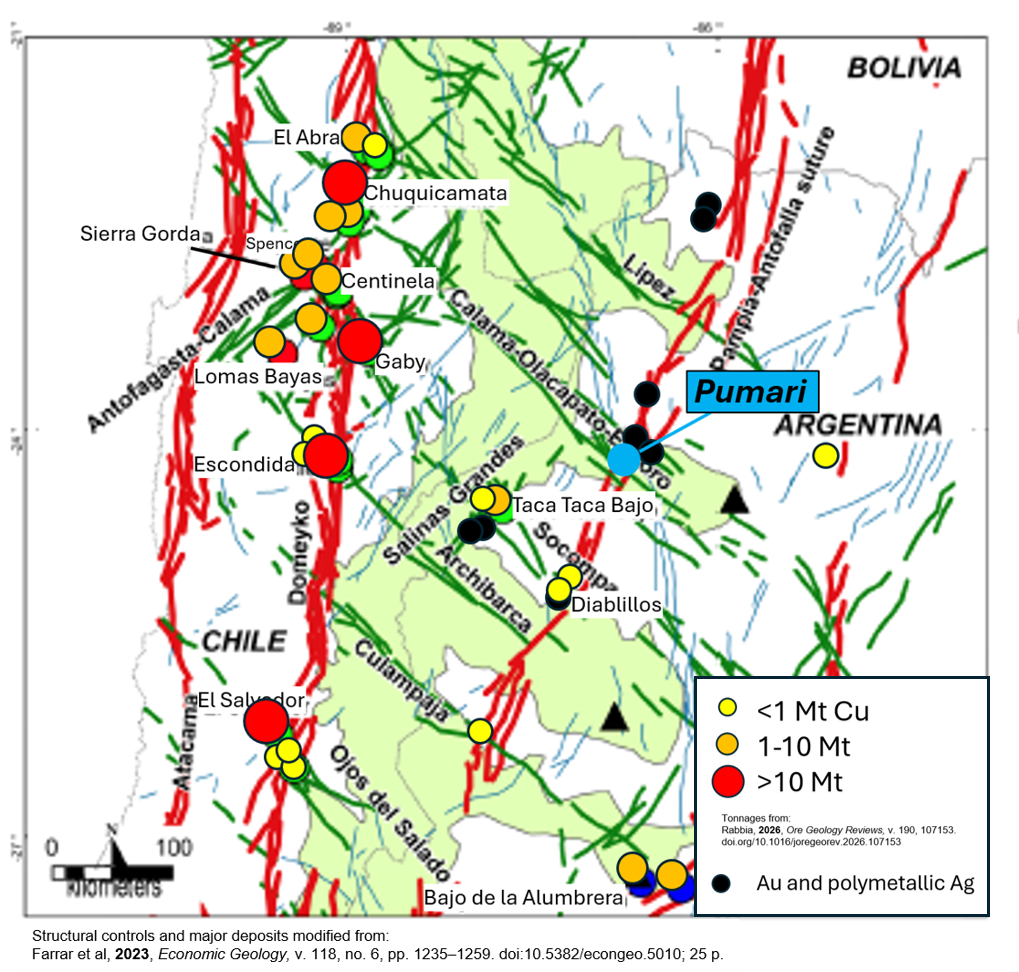
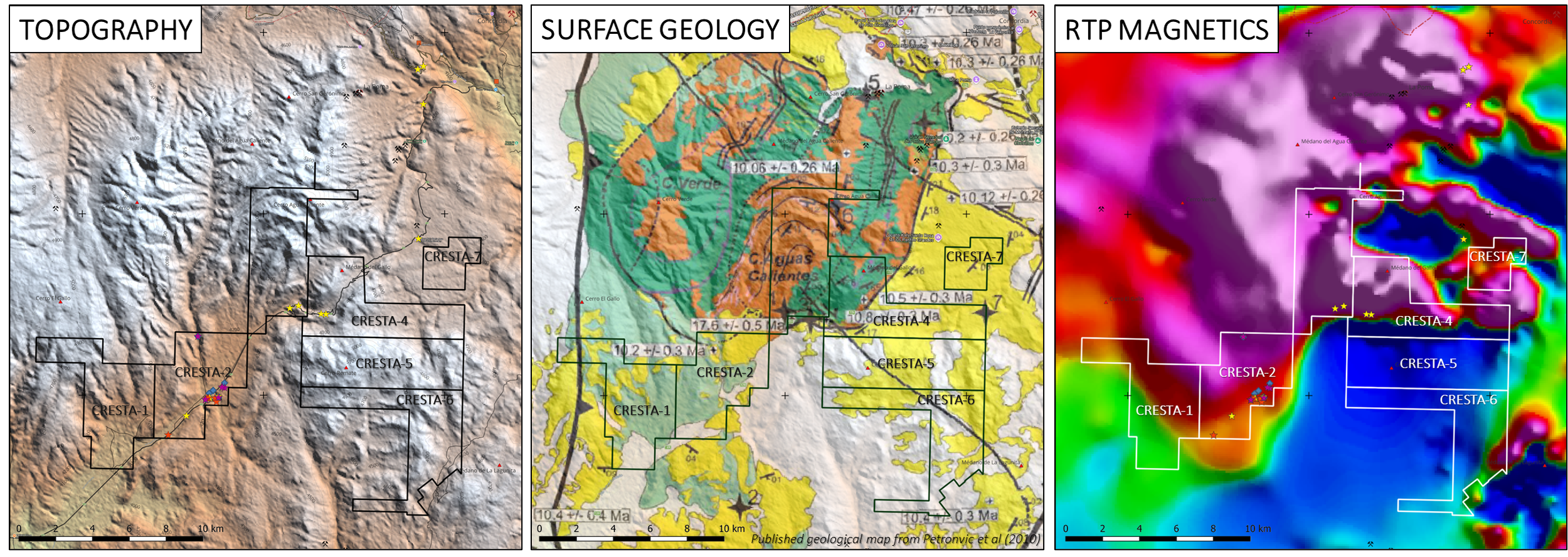
Situated at the margin of the Agua Calientes caldera, Tectoniq holds 12,500ha of 100%-owned mining rights located 125km NW of Salta city.
Regional screening identified this caldera as a priority target where younger volcanics obscure fertile, older magmatism.
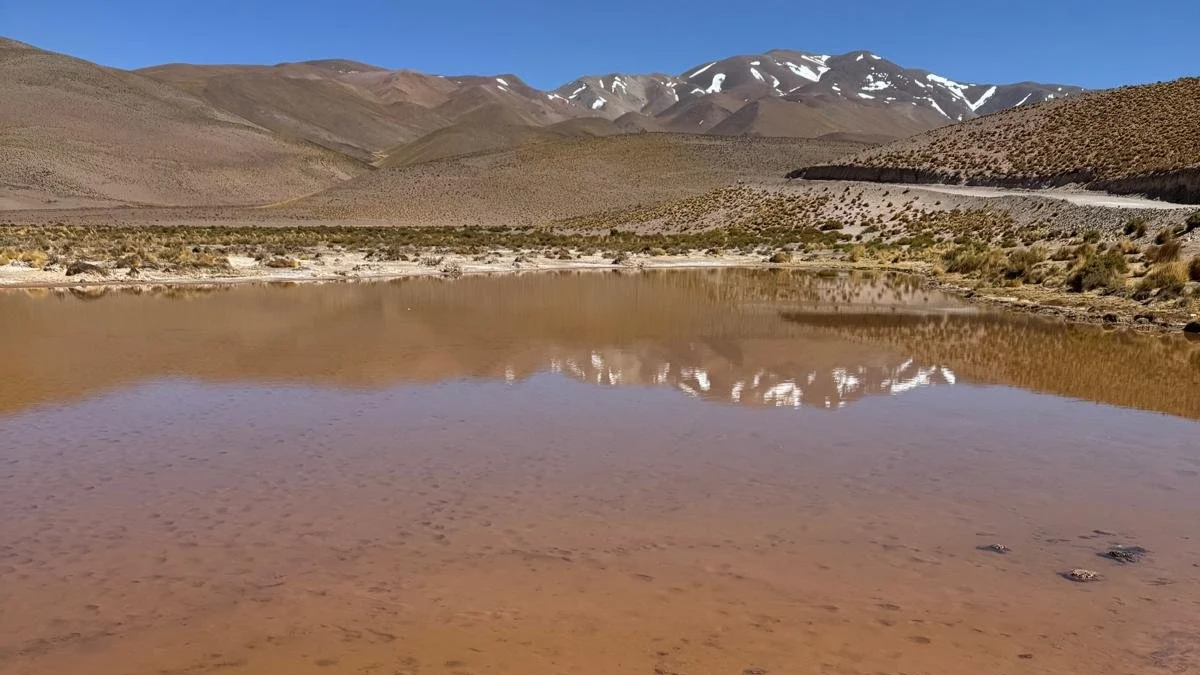
Reconnaissance fieldwork has discovered highly anomalous, metal-enriched groundwater, providing a clear geochemical vector to mineralization beneath the surface.
Utilising integrated analysis of soil, rock chip, and water samples Tectoniq have identified two high-priority Ag-Pb-Zn-Sb±Cu targets along a 1km strike which we have named Pumari.
To date, Tectoniq has explored less than 2% of its property holdings, leaving significant room for further discovery
Pumari is located at the intersection of major structural lineaments. This repeating trend has resulted in aligned clusters of significant copper porphyry deposits, despite this regional context, this area remains under-explored.
The Pumari prospect is near-drill ready, Tectoniq is currently planning drone magnetics to refine the drill targets and further mature the surrounding acreage.
Soil Geochemistry: Bedrock Specific Anomalism
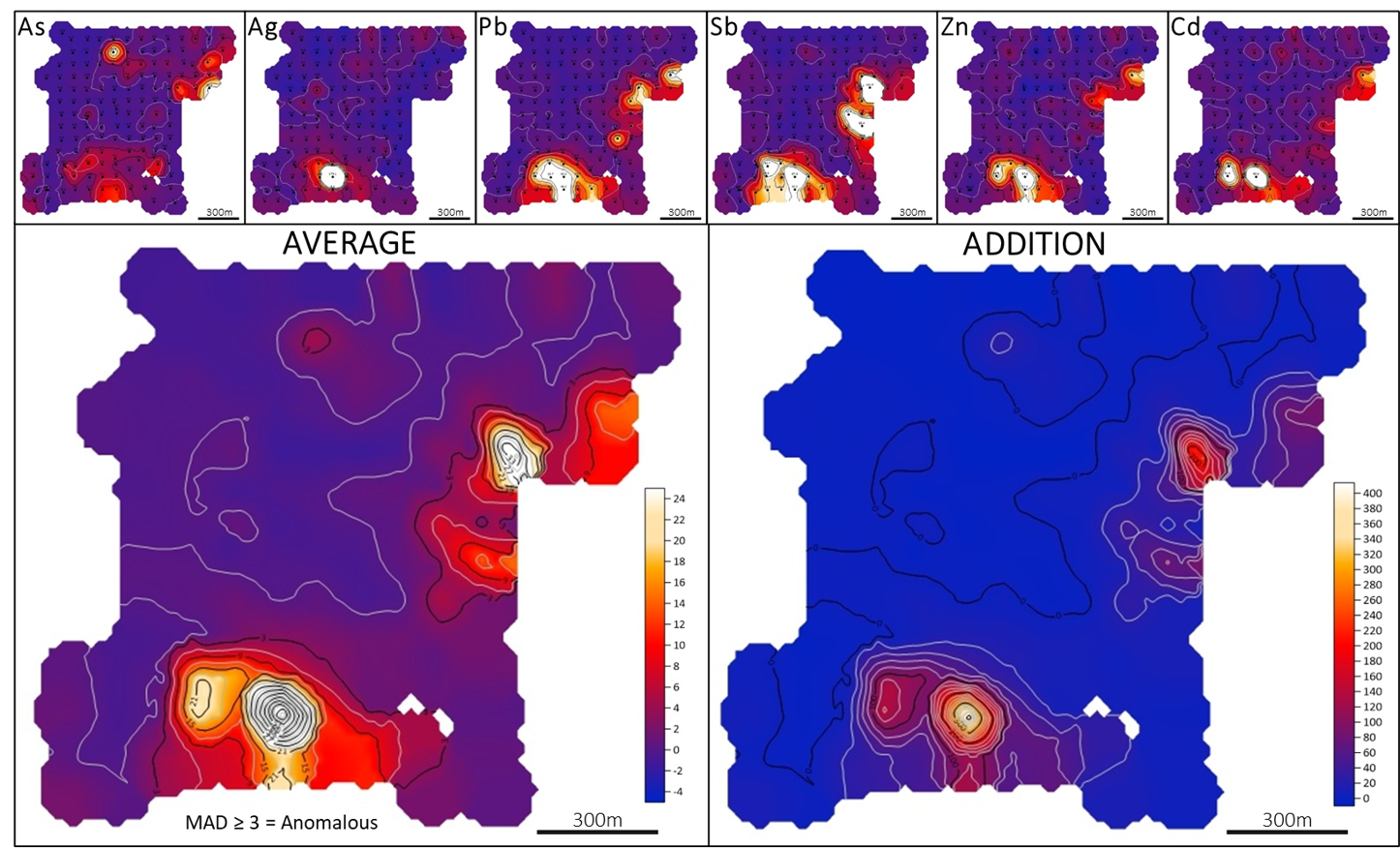
In Q4 2025 Tectoniq conducted a soil survey on a 100m grid spacing, focused upon an area of previously identified anomalous spring water.
We have analysed 144 soil samples, 21 rock chip, and 8 water samples and used statistical analysis across a suite of 53 elements to identify significant anomalism where Median Absolute Deviation (MAD) ≥3. This data has been gridded resulting in a series of maps which identify two high-priority geochemical targets (Ag-Pb-Zn-Sb) which define the Pumari prospect.
Outcropping magnetite and epidote veins and altered granodiorite are consistent with hydrothermal fluids focusing spatially with the identified anomalism.
Pumari is near drill ready, our next step is to acquire high-resolution drone magnetics to assist in final drill siting.
Evidence of a Major Mineralising System at Pumari
All the necessary elements for the development of a major orebody have been identified
Large Intrusive Source
Granodiorite with distinctive magnetic signature
Fluid flow + focussing
Magnetite + epidote veins with anomalous metals
Highly altered granodiorite + ignimbrite
Highly metal-enriched water in springs
Cu, Ag, Zn, Pb, Cr, Mg, Mn, Sn, As, Li, Ti ++
Significant multi-metal soil + rock chip anomalies
Spatially coherent Ag, Zn, Pb, Sb, As, Cd ++
Near surface ‘basement’
0-100m depth, likely <50m
Primary mineralisation likely driven by either a a porphyry copper system, an intrusion related polymetallic system, or an IOCG
Anomalies show robust multi-metal spatial coherence: significant underlying mineralisation with clear, easily accessible drilling targets
Geochemical data are consistent with a near-surface, intrusion-related mineralised system

(Left) Vein systems containing variable degrees of potassic and Fe alteration in granodiorite
(Right) Magnetite + epidote vein systems
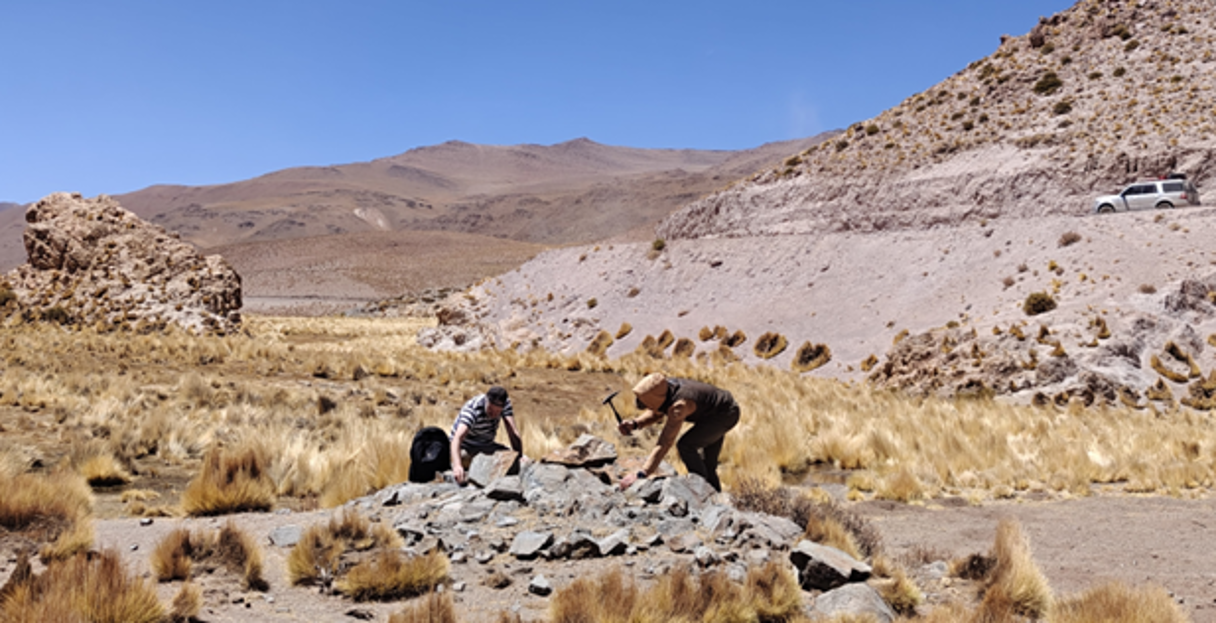
Variably altered granodiorite outcrops being investigated by the Tectoniq field team